

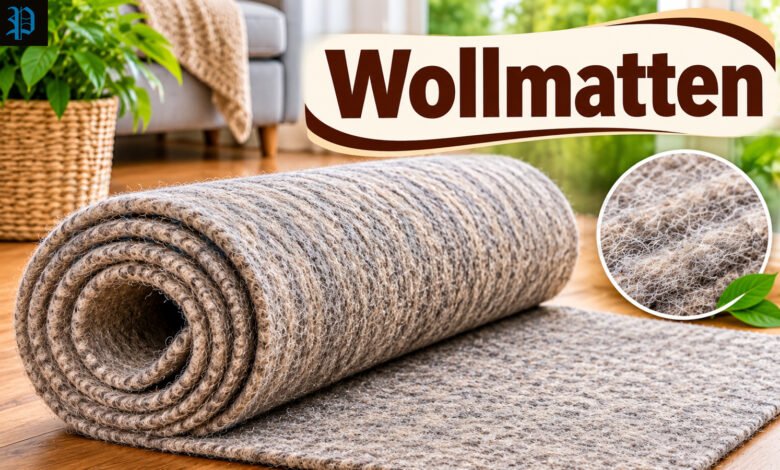
Have you ever stepped on a soft, warm mat on a cold morning and thought, “This feels so good”? That is the feeling many people get from Wollmatten. The word looks German, and it is. It simply means wool mats. But when you search for it online, you find many different things under this one name: floor mats, yoga mats, insulation for walls and roofs, pet beds, and even mats for the garden.
This guide explains it all in simple words. You will learn what Wollmatten are, how they are made, what they are used for, and what good and bad points they have. You will also get easy tips for buying and cleaning them. At the end, you will find answers to ten common questions.
What Are Wollmatten?
“Wolle” is the German word for wool, and “Matten” means mats. So Wollmatten are mats made fully or mostly from wool. The singular form is “Wollmatte”.
Most wool comes from sheep. Wool is a natural protein fibre that grows in the skin of the animal. Sheep grow a new fleece every year, so wool is a renewable material as long as there is grass for the sheep to eat.
Here is one thing you should know before you read on. “Wollmatten” is not one single, exact product type. In German shops, the word can describe very different things. A thick, fluffy yoga mat is a Wollmatte. So is a roll of wool insulation for a loft. So is a felted mat by your front door. What they share is the main material: wool.
Because of this, you should always check the product page and read what the mat is made of, how thick it is, and what it is made for. A mat made for insulation is not the right choice for your living room floor, and a yoga mat will not keep your roof warm.
A Short Look at Wool in Homes
People have used wool for thousands of years. It has been valued since the Stone Age as protection against rain, wind, snow and sun. Long before factories made plastic and foam, families kept their homes warm with wool blankets, wool rugs and wool-filled bedding.
In the last century, cheaper man-made materials took over many of these jobs. Polyester, nylon and foam were easy to make in large amounts. But in recent years, many people have started to look at natural materials again. They want fewer plastic products in the house, and they want things that last. This is one reason why Wollmatten have become popular again, especially in Germany, Austria and Switzerland, but also in other parts of the world.
How Wollmatten Are Made
The way a mat is made depends on its use, but the basic steps are often similar.
- Shearing. The wool is cut from the sheep. This is done once a year and does not hurt the animal. In fact, if a sheep is not shorn, the wool can build up and cause health problems.
- Cleaning. Raw wool contains dirt, grease and plant parts. It is washed and sorted.
- Carding. The clean fibres are combed so they lie in the same direction. This makes a soft sheet or web of wool.
- Forming the mat. Here, the paths split. The wool can be pressed and felted into a dense mat, woven into a rug, tufted onto a backing, or needle-punched into a fluffy batt that is used for insulation.
- Finishing. Some mats get a natural latex back so they do not slip. Wool for building insulation is often treated with borate salts. This helps to keep out insects and mould. Some mats are left in the natural colour of the wool, while others are dyed.
If you can, look for products that tell you where the wool comes from and how it was treated. Honest sellers share this information.
The Main Types of Wollmatten
Wool Floor Mats and Rugs
This is the type most people think about first. A wool mat on the floor feels soft and warm under bare feet. It works well in bedrooms, living rooms, hallways and reading corners. Wool is also quite strong. Rug makers often say wool rugs are very durable and suitable even for busy areas like entrances and hallways.
Felted wool mats are flat and dense. Woven or tufted ones have a pile that can be short or long. Thick-pile mats feel very cosy, but they need a bit more care because dust can hide deeper in the fibres.
Wool Yoga and Exercise Mats
Many people first meet Wollmatten when they look for a yoga mat. Wool yoga mats are thicker and fluffier than normal rubber or PVC mats. A well-known German example is a mat made from virgin wool on a natural latex back. A typical size is about 200 by 100 centimetres and about 1.5 centimetres thick. It weighs around three kilograms, so it is not a light travel mat.
Yoga teachers and students like these mats for slow practice, such as restorative yoga, yin yoga and meditation. They keep the cold of the floor away and are gentle on knees and hips. In shops, you will often see prices from about 50 to 90 euros for this type, depending on size, wool quality and whether the edge is sewn.
There are some trade-offs. A wool mat is not as grippy as a thin rubber mat, so it may not be the best choice for fast, sweaty styles of yoga. The latex back is also something to think about if you or someone in your home has a latex allergy.
Wool Insulation Mats
In the building world, “Wollmatten” often means sheep’s wool insulation in the form of mats, batts or rolls. These are fitted in roofs, walls and floors to keep heat inside the house in winter and outside in summer.
Wool insulation works because the fibres are crimped, which means they are naturally wavy. This waviness traps many tiny pockets of air, and trapped air slows down the movement of heat. Makers of sheep’s wool insulation often list a thermal conductivity of about 0.035 to 0.040 watts per metre kelvin. The lower this number is, the better the material keeps heat in. For comparison, one supplier lists standard glass mineral wool at about 0.044. Independent studies on natural fibre insulation show a similar range. One 2024 study in the journal Materials measured values between about 0.033 and 0.044 for materials made from sheep’s wool and hemp. A 2023 study in the Journal of Natural Fibers found that all tested wool-based materials could be seen as good thermal insulators.
Wool insulation is a bigger project than a rug. It is often fitted by a builder, and the product needs to fit local building rules. If you want this for your house, ask a professional.
Mats for Pets
Wool also appears in pet bedding. Some dog and cat mats are made of wool or a wool blend because they feel warm and soft. If you want a pet mat, read the label. Some products sold as “wool” are only partly wool and have a lot of synthetic fibre mixed in. Also check whether the mat can be washed, because pet beds get dirty fast.
Mats for the Garden
You may also see Wollmatten used outside. Gardeners sometimes use wool mats as a cover around plants. The idea is that the wool holds some moisture in the soil and protects roots from frost. Because wool breaks down naturally over time, it can slowly give nutrients back to the soil. This is a smaller niche, but it shows how flexible the material is.
Why People Like Wollmatten
Now let us look at the good points in more detail. Each one is based on how the wool fibre is built.
Warmth and Comfort
Wool fibres are wavy, so they hold a lot of air. That air works like a blanket. This is why a wool mat feels warm to the touch and does not pull heat from your feet or body the way a cold hard floor does. It is also why a wool yoga mat feels so different from a thin rubber one.
Good With Moisture
Wool is “hygroscopic”. This long word means that the fibre takes in water vapour from the air and gives it back again when the air gets drier. Wool groups such as the Campaign for Wool say wool can absorb up to about 30 percent of its own weight in moisture vapour and still not feel wet to the touch. When wool takes in moisture, it also gives off a little heat, which adds to the warm feeling.
In a house, this means a wool mat or a wool insulation layer can help smooth out small changes in humidity. It does not replace good air flow or a dehumidifier in a damp room, but it can make a space feel more comfortable.
Fire Behaviour
Wool does not catch fire easily. Industry sources often say wool ignites at around 570 to 600 degrees Celsius, while cotton catches fire at about 255 degrees. Wool also tends to char and stop burning once the flame is taken away, and it does not melt and drip like many synthetic fibres.
Please keep this in the right frame, though. Wool is “hard to burn”, not “fireproof”. Wool insulation products are tested under building standards. For example, some wool insulation products are given a European fire class of E, and others C. Always read the fire rating of the exact product you buy.
Sound Absorption
Soft, fibrous materials are good at soaking up sound. Wool mats and wool insulation can reduce echo in a room and help lower noise between floors. In a lab test from 2023, wool-based insulation materials showed good sound absorption. Camel wool did best, and sheep wool was also in a good range. In a flat with hard floors, a thick wool mat can make a real difference to how loud your steps and your voice sound.
Strong and Long-Lasting
Wool fibres can bend many times and then return to their shape. They are also covered with a thin natural wax, and the surface has tiny overlapping scales. This outer layer helps the wool to resist stains and dust. It also tends to carry less static, which means it picks up less lint.
With good care, a quality wool mat can last for many years. Some stay in a family for decades. A cheap synthetic mat often loses its shape and has to be thrown away much sooner.
Natural, Renewable and Biodegradable
Wool is made of a protein called keratin. In soil or water, tiny organisms can break it down into parts like nitrogen and sulphur, which can act as plant food. That is why wool is described as biodegradable, while many man-made fibres can stay in the environment for a very long time.
Wool is also renewable, because sheep grow a new fleece each year. For a mat that will live in your home for years, this is a nice thing to know.
That said, “natural” does not automatically mean “perfect for the planet”. Farming has its own effects, and dyes, glues, latex backs and long transport can add to a product’s footprint. Look for clear information from the maker, and for recognised labels if you care about animal welfare or organic farming.
Things to Think About Before You Buy
No material is right for everyone. Here are the points that may make you stop and think.
- Price. Good wool mats usually cost more than synthetic ones. Over many years, the price per year of use can be low, but the first cost is higher.
- Shedding. New wool rugs often lose some loose fibres. This is normal. You will read more about it below.
- Itch. Some people find coarse wool scratchy on bare skin. Fine, soft wool is usually more comfortable. If you have very sensitive skin, test the mat with your hand and arm before you buy a large one.
- Allergies. Some sellers say wool is less friendly to dust mites than other materials. Others say wool can bother people who are allergic to wool or to lanolin, the natural wax. Everyone is different. If you have allergies or asthma, ask your doctor for advice.
- Latex. Many wool yoga mats have a natural latex back. People with a latex allergy should avoid these.
- Moths. Wool can attract clothes moths if it is stored dirty or damp. Clean mats before you store them, and keep them dry.
- Water. Wool does not like being soaked for a long time or heated hard. This makes cleaning a bit more careful than with a plastic mat.
- Weight. Thick wool mats are heavy. This can be a problem if you want to carry one to class every day.
How to Choose the Right Wollmatte
Use this short checklist when you shop.
1. Decide what the mat is for. Floor comfort, yoga, pet bed, or building insulation? These are very different products. Do not mix them up.
2. Check the material list. “100 percent wool” or “virgin wool” is different from “wool blend”. A blend can still be good, but you should know what you are paying for. The term “new wool” (Schurwolle in German) means wool that was taken from a living sheep and not recycled from old textiles.
3. Look at the size and thickness. Measure your space first. For floor mats, think about where furniture will stand. For yoga mats, check that the length suits your height.
4. Read the back of the mat. A non-slip back is useful on smooth floors. Find out what it is made of, especially if you have allergies.
5. Look for care information. Can the mat be machine washed, or is it spot clean only? Be honest about how much time you want to spend on care.
6. Ask about the wool source and treatments. If a mat is described as organic or eco-friendly, there should be some proof, like a certificate. Be careful with big claims and no details.
7. Check the return rules. Wool is a natural material, so colour and feel can vary a little. A shop that lets you return the item gives you peace of mind.
8. Think about underfloor heating. If you plan to use a mat over a heated floor, follow the maker’s advice for that product.
How to Take Care of Wollmatten
Wool mats are easier to care for than many people expect. A few simple habits will keep them in good shape.
Vacuum Gently
Vacuum your wool mat about once a week. For busy areas, a bit more often is fine. Use suction only, and turn off any spinning brush or beater bar. Rug makers often warn that a beater bar can pull out fibres and damage the pile.
Rotate It
Turn your mat around every three months or so. This spreads wear and sunlight evenly, so one side does not fade or go flat before the other.
Use a Rug Pad
If your mat goes on a hard floor, a good pad underneath stops it from sliding. It also adds cushioning and protects both the mat and the floor. Pick a pad that suits your floor type.
Deal With Spills Fast
When something spills, act quickly. Lift off any solid pieces with a spoon or a dull knife. Then blot the wet spot with a clean white cloth. Do not rub, because rubbing pushes the stain deeper and can damage the surface. If you need a cleaner, use a mild product made for wool, and test it on a hidden corner first. Avoid bleach and strong chemicals.
Be Careful With Water and Heat
Most makers do not recommend steam cleaning a wool rug, because strong heat and a lot of water can harm the fibres and the backing. Many wool mats are spot clean only. Some are machine washable, but only follow this if the care label says so. One German seller of wool yoga mats, for example, says you can wash its mat on a cold wool cycle with a good detergent and then brush the pile smooth. Do not copy this for a different mat unless that mat’s own label says the same.
For a big stain or a very dirty rug, a professional wool rug cleaner is the safest choice.
Air It Out
Wool naturally resists smells, and fresh air helps a lot. On a dry, breezy day, hang your mat outside in the shade for a few hours. Avoid strong sun for a long time, because it can fade the colour.
Store It Well
If you need to store a mat, make sure it is clean and fully dry. Roll it instead of folding it sharply. Keep it in a cool, dry, dark place. A breathable bag is better than sealed plastic, which can trap damp air.
What About Shedding?
Many new wool rugs shed fluffy bits for a while. This does not mean the mat is bad. Loose fibres are left from the making process, and they come out as the mat settles into your home.
How long does it last? Opinions from sellers vary. Some say a few weeks, others say it can take several months. It also depends on the type of wool and how the mat is made. Longer fibres tend to shed less than short ones.
Here is what helps:
- Vacuum regularly with suction only.
- Do not pull on loose strands, because this can pull out good fibres too.
- If a tuft sticks up, trim it carefully with scissors.
- Be patient. Shedding usually goes down with time.
Shedding can go up for a short time after wet cleaning, because water makes the fibres swell. Go back to your normal routine and it should settle down.
Wollmatten Compared With Synthetic Mats
Here is a simple comparison. It is a general guide, so single products can be different.
| Point | Wool Mats | Synthetic Mats |
|---|---|---|
| Source | Natural, from sheep | Usually made from oil-based materials |
| Feel | Soft, warm, a bit springy | Can be soft, but often feels less warm |
| Moisture | Takes in and releases vapour | Usually does not take in moisture |
| Fire | Hard to ignite, tends to self-extinguish | Many types melt and drip |
| End of life | Breaks down naturally | Can stay in the environment for a long time |
| Price | Higher at first | Often cheaper at first |
| Care | Needs gentle care | Often easy to wipe or wash |
| Lifespan | Can be very long with care | Often shorter |
Synthetic mats have their own good sides. They are cheap, light, and good for wet areas like bathrooms or for a very low budget. The right choice depends on your needs.
Where to Buy Wollmatten
You can find wool mats in several kinds of places:
- Specialist yoga shops and online stores for wool yoga mats.
- Home and rug stores for wool floor mats.
- Building supply stores and eco-building suppliers for wool insulation.
- Craft markets and small makers for handmade felted mats.
- Large online marketplaces, which often have a wide choice but also a wide range of quality.
When you buy online, read the reviews with care. Look for comments about softness, shedding and how the mat looks after some months. Be careful with very cheap prices for “100 percent wool” mats, because they may not be what they say. A clear product description, real photos and good contact details are good signs.
A Quick Note on Sustainability
Many people choose Wollmatten because they want to buy less plastic. This is a good reason, but think about the whole picture. A wool mat that you use for 15 years is much better for the planet than three cheap mats that you replace. The longer you keep it, the better.
If your mat is old and you want to throw it away, remember that pure wool can break down naturally. You can ask a local textile recycling point whether they take wool, and some wool can be reused for stuffing or garden use. Mats with a latex back or mixed fibres are harder to recycle, so check what is possible where you live.
Final Thoughts
Wollmatten are more than a trend. They are a simple idea that people have used for a very long time: use the warm, strong, natural fibre that sheep grow every year. Whether you want a soft rug for your bedroom, a warm yoga mat, or wool insulation for a new house, wool has real strengths. It keeps warmth, handles moisture, resists fire better than many fibres, absorbs sound, and can last for years.
It is not perfect. It can cost more, it may shed at the start, and it needs gentle care. Know what you want, read the label, buy from a seller you trust, and look after the mat. If you do, a good Wollmatte can be a comfortable part of your home for a long time.
Frequently Asked Questions
What does Wollmatten mean?
Wollmatten is a German word. “Wolle” means wool and “Matten” means mats, so it means wool mats. The singular form is Wollmatte. The word can describe floor mats, yoga mats, pet mats and wool insulation mats.
What are Wollmatten used for?
People use them in many ways. At home, they are used as floor mats, rugs, yoga and meditation mats, and pet beds. In buildings, wool mats and batts are used as insulation in roofs, walls and floors. Gardeners also use wool mats as a cover for plants and soil.
Are Wollmatten good for insulation?
Yes, sheep’s wool insulation is a recognised insulation material. Makers usually list a thermal conductivity of about 0.035 to 0.040 watts per metre kelvin, and independent studies on natural fibre insulation show a similar range. Wool also manages moisture and absorbs sound. For a house project, ask a builder or energy adviser to choose the right product and thickness.
Is wool really fire resistant?
Wool is hard to ignite and tends to stop burning when the flame is removed, and it does not melt and drip like many synthetic fibres. Industry sources say it ignites at around 570 to 600 degrees Celsius. This does not mean it is fireproof. Always check the fire rating of the specific product.
Can I wash Wollmatten in a washing machine?
It depends on the mat. Many wool mats are spot clean only, and heat and heavy water can damage them. Some are made to be machine washed on a cold wool cycle. Always follow the care label of your own mat, and if there is no label, ask the seller or choose a professional wool cleaner.
Why does my new wool mat shed?
Loose fibres are left over from the making process, so new wool mats often shed. It is normal and usually gets better with time. Vacuum with suction only, do not pull loose strands, and be patient. It can take a few weeks or several months, depending on the mat.
Are Wollmatten safe for children and pets?
Wool is a natural fibre, and wool mats are commonly used in homes with children and pets. They are soft and warm for play. For babies, follow the safe sleep advice of your doctor or health visitor, and do not put soft mats or thick bedding in a baby’s sleep space. Check the label for any treatments, and ask your doctor if your child has allergies or very sensitive skin.
Are Wollmatten good for people with allergies?
It is different for each person. Some sellers say wool is not a good home for dust mites and that it resists dust. But some people react to wool or to lanolin, and some yoga mats have a latex back. If you have allergies or asthma, ask your doctor, and buy from a shop with a fair return policy.
How long do Wollmatten last?
A good wool mat can last many years, sometimes decades, if you care for it well. Vacuum gently, rotate the mat, use a rug pad, clean spills fast, and keep it away from long periods of strong sun and too much water. Cheap or thin products may wear out sooner.
Are Wollmatten worth the money?
They often cost more at first than synthetic mats. But they can be a good choice if you want a warm and natural product that lasts. Think about how long you plan to use it, how much care you can give it, and what you need it for. For a very wet area or a short-term need, a synthetic mat may be a better fit.
Where This Information Comes From
This article is based on information from the Woolmark Company and the Campaign for Wool about the natural properties of wool, plus a 2024 study in the journal Materials and a 2023 study in the Journal of Natural Fibers about wool-based insulation. It also draws on product data from wool insulation makers and building product guides, care guides from rug makers and retailers, and product pages from German yoga mat shops. Product details, prices and test values can change, so always check the latest information from the maker before you buy.
MORE INFORMATION STAY CONNECT FOR : PAPULAR NEWS


